Anil Kapoor To Nitin Gadkari: What India's Personality Rights Cases Actually Protect
As personality rights and defamation increasingly overlap, how can the law protect people from unauthorised use of their identity without restricting legitimate criticism or satire?

In 2023, when Anil Kapoor approached the Delhi High Court, he wasn't just asking for protection from deepfakes. He asked the court to protect his name, his image, his voice, his signature dialogue — and the court agreed, issuing an order so wide it covered the word "jhakaas".
It was a landmark moment, but also a signal of how far personality rights in India were prepared to travel. Since then, the list of public figures seeking similar protection has grown steadily: Amitabh Bachchan, Jackie Shroff, Aishwarya Rai Bachchan, Sonakshi Sinha, Mohanlal.
In 2026, actors Shruti Haasan and Jahnvi Kapoor approached courts over AI-generated and sexually explicit content using their likenesses.
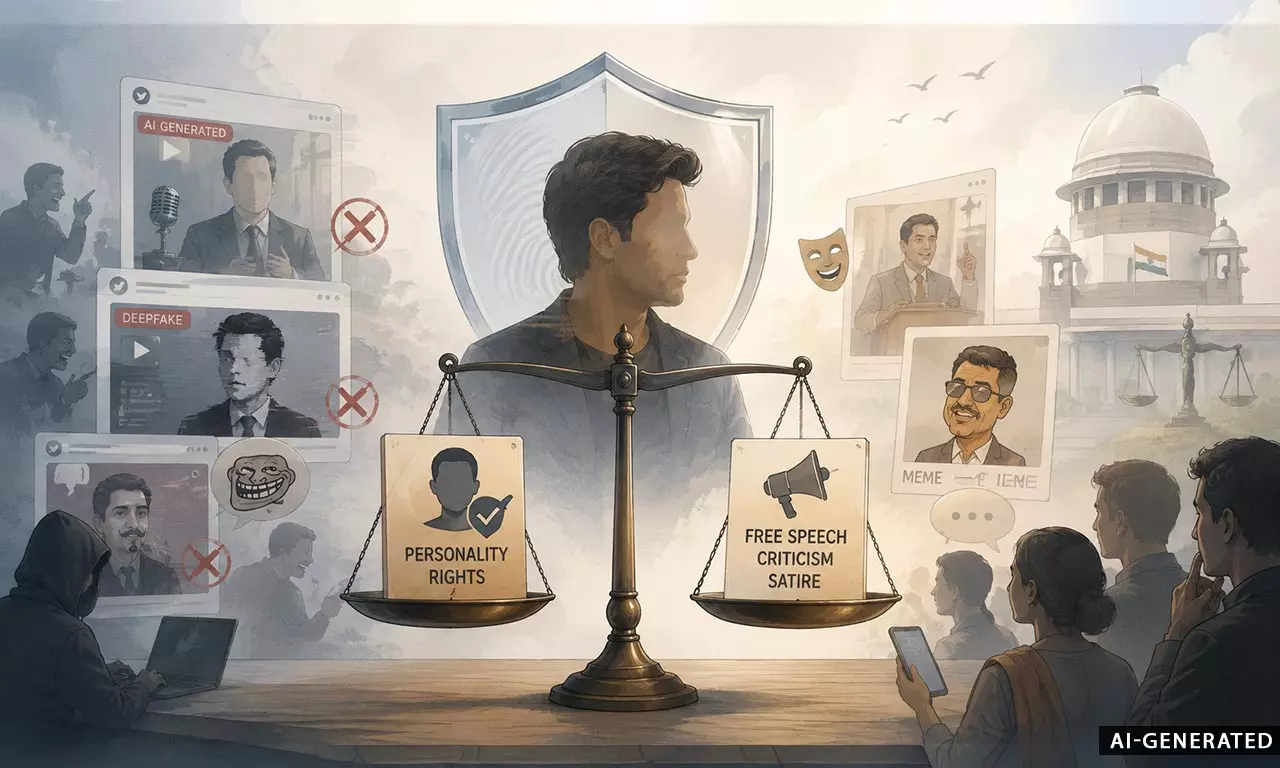
India has no dedicated personality-rights law. Courts are building it case by case — even as AI makes realistic impersonation easier and cheaper than it has ever been. The result is a body of law that is expanding to meet a genuine problem, while raising a question nobody has cleanly answered: when does protecting someone's identity become a way to silence criticism?
Decode spoke to legal experts about how personality rights can give public figures a broader route than defamation to challenge the unauthorised use of their identity, including through takedown orders. But lawyers warn that because these claims do not always require proving falsity or defamation, they can also threaten protected criticism, satire, political speech and commentary.
How are personality rights different from defamation?
Personality rights give individuals control over the commercial and public use of elements of their identity, such as their name, image, voice or likeness. Over time, Indian courts have extended these protections beyond traditional commercial exploitation to emerging forms of misuse like, AI-generated images, synthetic voices and deepfakes.
Intellectual property lawyer Abhilasha Rathore said courts are not simply treating a person’s face or voice as “property”. Instead, they are protecting “an individual’s identity, dignity, privacy, reputation and, in some cases, its commercial value”.
At the heart of it, she said, is control over one’s persona.
“Even a flattering deepfake could potentially be restricted because the core harm lies in the loss of control over how that identity is represented and used,” Rathore said.
Defamation, by contrast, is about harm to a person’s reputation through false or damaging statements. It generally requires the person to show that the content is false or defamatory and has caused, or is likely to cause, reputational harm.
The difference matters when public figures seek to remove content online.
Why can personality rights be easier to pursue?
Shwetasree Majumdar, Managing Partner of Fidus Law Chambers, said the problem partly lies in how broadly Indian courts have developed personality rights without clearly defining their limits.
A defamation case requires the plaintiff to identify the specific false or damaging statement. Against anonymous accounts and offshore intermediaries, this can become “slow and evidence-heavy”, she said.
Personality-rights claims take a different route. They focus on the unauthorised use of a person's identity and allow courts to use tools developed in intellectual property cases, including dynamic injunctions and orders seeking subscriber details or IP logs from platforms.
At the early stage, Majumdar said, the plaintiff may only need to show that their identity has been used.
“Fame becomes the cause of action,” she said.
That difference becomes important when the content is about what a public figure has actually said or done.
What happens when personality rights meet political criticism?
The Raghav Chadha case illustrates the line courts may have to draw. Chadha approached the Delhi High Court over social media posts, including AI-generated and manipulated content, that allegedly portrayed him as having “sold himself for money” after his switch from the Aam Aadmi Party to the Bhartiya Janta Party.
During the proceedings, the court questioned whether the posts amounted to a personality-rights violation or were instead criticism of Chadha’s political decisions. His counsel eventually said he would not press the personality-rights claim and would confine the case to defamation. The court then considered the interim relief on the question of defamation.
For Rathore, the case highlights the need to balance dignity with political expression. Public figures, she said, must remain open to criticism and satire, particularly over their political decisions. At the same time, “explicitly vulgar or abusive content can harm a person’s dignity and constitutional rights”, making it necessary to strike a balance between free speech and personality rights.
The Gadkari case brings a more complicated overlap. The Union Minister approached the Bombay High Court over 26 URLs containing allegedly defamatory posts, AI-generated videos, manipulated images and memes linking him to the E20 ethanol-blending programme and alleging his son benefited from it. Gadkari argued the programme falls under the Petroleum Ministry, not his Road Transport Ministry, and that the content goes beyond legitimate criticism.
His suit invokes both defamation and personality rights.
Majumdar argued that courts should look at the actual harm in each piece of content rather than the format it arrives in. If a post falsely claims that Gadkari or his family profited from a government policy, "the wrong is defamation and nothing else."
The use of a face-swap or AI-generated video does not, by itself, change the nature of that harm — it may make an allegation more convincing or damaging, but the underlying issue remains one of reputation.
Personality rights have a clearer role, she said, when someone's identity is being commercially exploited: their face or voice used to sell a product, or to create a false endorsement.
Could personality rights go too far?
Rathore said the risk is real. Unlike defamation, personality-rights claims do not necessarily require proof that a statement is false. As a result, “virtually any unauthorised depiction — a meme, a parody, or a piece of news commentary — could technically be pleaded as an infringement”, potentially giving public figures a veto over their public image.
She also pointed to how quickly fame can change in the digital age: people can become public figures overnight through a viral moment and recede just as quickly.
Majumdar similarly warned that if personality rights are extended to every false or offensive portrayal, they could move beyond protecting the commercial value of a persona and become a tool for restricting speech.
What would a workable balance look like?
Majumdar said courts should require plaintiffs to identify each URL and explain what is unlawful about it, while making clear which legal interest is being protected. Broad orders covering “any and all content” should be avoided, she said, and people whose content is removed should have a route to challenge the order.
She pointed to the 2024 Jackie Shroff case, where the Delhi High Court recognised memes as a growing form of comedic expression and declined to order indiscriminate takedowns.
Additionally, AI is making these boundaries harder to draw. A person's face, voice and mannerisms can now be reproduced with remarkable accuracy, while entirely fabricated statements and conduct can be made to look real.
Rathore said existing legal principles may address some of these cases, but AI-generated impersonation could require clearer standards around consent, attribution, platform responsibility and remedies.
"'Those safeguards,' Rathore said, 'need to be built without weakening protections for legitimate satire, commentary and artistic expression.'
As Majumdar puts it,
“Political speech is where that drift will be felt first".