
Free To Use, Costly To Run: Who Really Pays For UPI?
India's most-used payment system was built on a promise: free for everyone. A 2026 law change is quietly testing how long that promise holds — and who gets to decide.

Every UPI transaction has a real cost: the servers that route it, the 40 kilobytes of data it generates that must be stored for years. "Free for the user" is not the same as free to run. That cost has to be absorbed somewhere.
The public argument over UPI charges keeps getting reduced to one question: will consumers pay more? The answer to that narrow question is probably "not directly, but definitely indirectly" — and it tells you very little about who will actually end up paying, and who stands to gain.
What is UPI, and why does any of this matter?
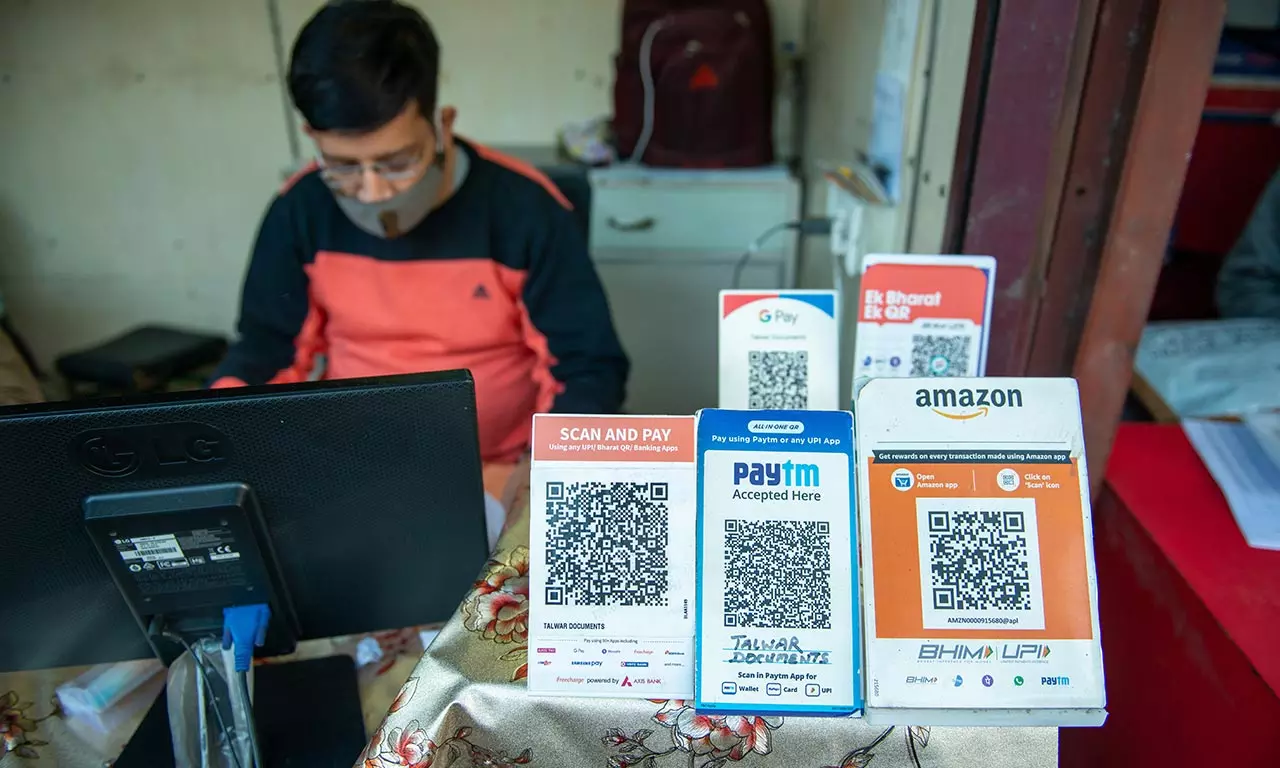
UPI — the Unified Payments Interface — is the system that makes it possible to send money instantly between any two bank accounts in India using a phone number or QR code. It doesn't matter which bank you use, or which app — PhonePe, Google Pay, Paytm, or a bank's own app. The money moves in seconds, and until now, neither the sender nor the receiver paid anything for that.
In the last fiscal year, UPI processed over 24,000 crore transactions worth roughly Rs 314 lakh crore. It accounted for around 85% of all digital transactions in India and nearly half of all real-time payment volume globally. Over 55 crore people use it.
At that scale, UPI is not just a payment app. It is infrastructure — the way hundreds of millions of people buy food, pay rent, and receive wages.
Who has been paying for UPI, and who earns from a charge?
Three parties have historically absorbed the running costs.
The fintech apps — PhonePe, Google Pay, and others — paid cashbacks and promotions to acquire users, betting they could later monetise transaction data, notably for lending. The government briefly reimbursed banks' fees for two years, treating it as an investment in formalising the economy. Merchants have carried the residual cost of accepting payments.
Introducing a merchant charge shifts revenue toward the banks and fintechs that operate the rails. The open question is whether that money flows fairly toward all the entities that enable UPI, or toward already-dominant players.
What is the 2026 change proposing?
The proposal being debated is an MDR — a Merchant Discount Rate — on UPI transactions above Rs 2,000. MDR is the small fee a merchant pays to the payment network for processing a transaction. Credit and debit cards have always worked this way. UPI was explicitly exempted from MDR in 2020, which was a large part of why merchants adopted it so rapidly.
The headline figure in this debate is small — single-digit paise per transaction. NPCI, the National Payments Corporation of India (the body that runs UPI), has set its own usage fee at around 10 paise for small payments, with merchant transactions carrying roughly 10 paise plus a small percentage levy on the amount. When commercial banks have estimated the cost of running one UPI transaction end-to-end, it has come out around Rs 1– Rs 3.
The honest arithmetic: UPI is very cheap to run, but it is not free to run.
Does the Rs 2,000 threshold protect everyday users?
The threshold targets high-value transactions, not everyday ones. The average UPI payment is well below Rs 2,000, so on paper the poor and middle class look shielded.
The caveat is pass-through. Merchants rarely absorb new costs — they reprice. A fee on a large merchant gets spread across prices and shows up in the consumer's bill, even if the consumer never shops there, because competitors follow. The Rs 2,000 line protects everyday transactions at the point of payment. It does not by itself stop the cost from reaching everyday consumers through general pricing.
The railways offer the clearest template: the state's own ticketing platform charges a "convenience fee" on digital bookings even though nearly all tickets are now booked online. It is framed as a choice; in practice it becomes the only realistic option.
If consumers aren't billed directly, do they still feel it?
Almost certainly; but the mechanism is indirect, and that indirectness is part of why the debate stays muddled.
The more pointed question is whether consumers are already paying — just not with money. UPI's early growth was subsidised precisely because transaction data is valuable: usable for credit decisions, risk modelling, and product targeting. A transaction that costs nothing in money can still generate significant financial and behavioural data.
This reframes what "payment" actually means. If consumers are already contributing data value, an additional monetary fee raises the fair-pricing question sharply: are users being asked to pay again for something they already supplied?
Who actually decides what UPI costs?
This is the question that matters more than the fee number itself.
The governing law is old. Digital payments in India run on the Payments and Settlement Systems Act, 2007 — written before UPI existed, yet still governing it today. Under that law, NPCI became the near-monopoly that runs UPI. It was set up originally to let banks share infrastructure and save money. It is a private non-profit, but controlled largely through public-sector banks, and it operates without the kind of public accountability a government body would face. There is now a larger question of who truly benefits: many participants absorb costs at a loss while a few profit.
The 2026 amendment moves the power to license payment systems out of the RBI's sole hands into a board where the government and RBI both sit. In effect, it concentrates the power to set pricing in the government rather than in the market or the regulator. An attempt to amend the law in 2018, aimed at boosting competition, was resisted. The 2026 change moves in a different direction.
Why does that matter to you? This is not just "the UPI fee law." It decides who prices the country's most-used payment system — and it moves without the kind of public scrutiny a change this big usually attracts.
Could this push merchants back toward cards?
Not really, the price conscious segment will move towards cash. India has already run this experiment inside UPI itself. When RuPay credit cards and credit lines were linked to UPI, payments above Rs 2,000 began carrying card-style merchant fees, and a significant class of small merchants responded by switching credit-on-UPI acceptance off rather than paying. Card MDRs run roughly 0.9–2% against the 0.3% proposed for UPI — but the lesson from credit-on-UPI is that merchant behaviour is not set by relative comparison: some merchants refuse any rail that charges, so reintroducing MDR risks acceptance withdrawal, not just price pass-through.
Card networks — Visa and Mastercard — have always operated on an MDR model. If UPI moves toward the same pricing, some of the cost advantages that drove merchants to switch from cards to UPI narrows. Whether that actually shifts merchant behaviour depends on the final rate.
There is also a bigger structural point. The PSS Act's near-monopoly on UPI could loosen as new networks and new use-cases come online. How pricing is set — transparently and competitively, or by executive decision — will shape whether the payments market stays open or consolidates further.
What about AI-driven payments?
Today you pay by opening an app, scanning a QR code, or tapping. In an agentic payment, you hand that job to an AI assistant — an "agent" — and it pays for you. You tell it to order this week's groceries; it picks the items and completes the UPI payment on your behalf. No app, no QR, no tap. The smart fridge that restocks its own milk would pay the same way.
This is already being built. OpenAI and Stripe have released an open Agentic Commerce Protocol, Google has built the Agent Payments Protocol, and NPCI is working on a Unified Agent Protocol that would let verified AI agents make small UPI payments within limits the user sets.
This sharpens the pricing debate: a human unhappy with a payment fee can still walk away and pay cash — an AI agent cannot. Digital payment is the only way an agent can pay, so whatever UPI charges per transaction becomes a built-in cost of every AI-automated purchase.
Is zero MDR actually sustainable?
UPI is now critical infrastructure — comparable to roads or power — and infrastructure that cannot cover its own costs becomes fragile. A scheme that relies on a permanent, open-ended subsidy is not obviously sustainable.
But the honest difficulty is that nobody has published what UPI actually costs to run. Arguments on both sides currently rest on estimates. The next step is a transparent white paper from NPCI and the RBI on real operational costs — not estimates from parties with a stake in the outcome.
And if cost recovery is the genuine goal, designs exist beyond a per-transaction percentage. A fixed, account-level charge — similar to the small SMS-alert fee users already pay — with a subsidy for those who cannot afford it, would achieve cost recovery without attaching a fee to every merchant transaction.
Has India decided something like this before?
Once, and the process looked different.
In 2016, when Facebook's Free Basics tried to split the internet into a free tier and a paid one, the public pushed back hard. The SaveTheInternet campaign sent over a million emails to TRAI, the Telecom Regulatory Authority of India, which held an open consultation before banning differential data pricing.
UPI is more pervasive than the 2015 internet ever was — it is how people buy food, pay rent, and receive salaries. That history is worth remembering not as an alarm but as a measure of the standard India once set: that pricing a shared public utility is decided in the open, with the people who use it in the room. A million voices and an open consultation then; a voice vote now. The question today is whether the pricing of UPI will clear the same bar India set a decade ago.
Done transparently, tied to real and published costs, pricing UPI could stand as legitimate cost recovery. Done without the people who pay it in the room, it risks turning UPI into the digital version of a toll placed on a road the public was told was free — levied once dependence on it was deep enough that there was no real alternative. And as India's experience with highway tolls shows, when people feel a charge is disconnected from them, they find workarounds — all of which undermine the very system the state intended to sustain.