
The Passport Paradox: When The State Teaches Citizens To Doubt Its Own Document
On a day meant to celebrate India's most widely held identity document, the government undermined it, and revealed a gap in the country's citizenship architecture that no single document can fill.

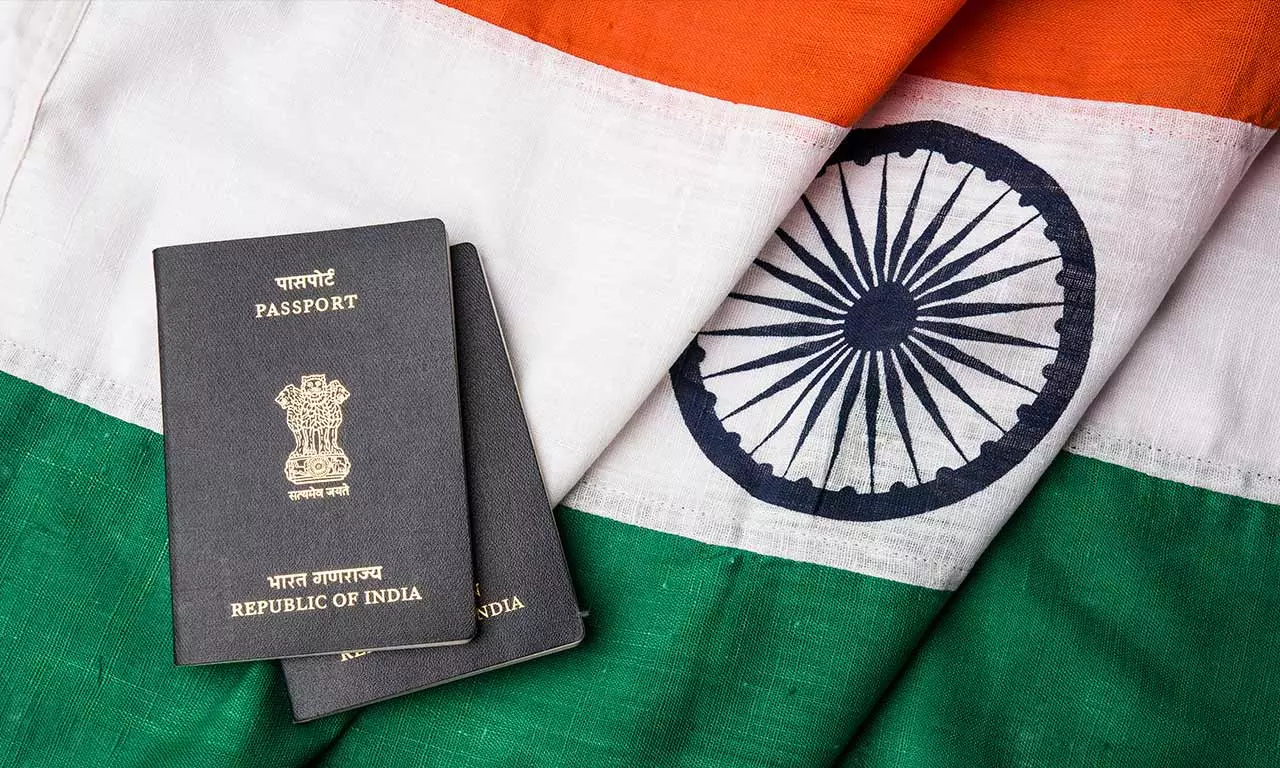
On Passport Seva Divas, a day designated to celebrate the country’s most trusted document, the Ministry of External Affairs made a statement that sent ripples of confusion across the country. They clarified that a passport is merely a "travel document" and not, in strict legal terms, proof of citizenship. For millions of citizens across the country who have never questioned their belonging, this raised a question that had never occurred to them: If this document is not proof of who I am, then what is?
The government would later attempt damage control, clarifying that passports are issued only to citizens after thorough verification. But the damage was done. The State, through its own words, had sowed doubt about a document it itself creates, verifies, and issues.
The statement was not legally incorrect. It was administratively careless and publicly tone-deaf.
A document people organise their lives around
For most Indians, the passport is not merely a travel document. It is the most authoritative thing the Republic has ever given them. It bears the name of the country, carries their photograph, and is honoured at every border in the world precisely because foreign governments trust that India has verified the bearer before issuing it.
To obtain one, files are opened, addresses are verified, police reports are called for. Only then does the State print its name on that small dark book and place it in a citizen's hands. The passport carries a presumption of citizenship that is strong, rebuttable, and real. To tell a citizen that this document does not prove belonging is to ignore the entire architecture of trust the State has built around it over decades.
The practical consequences were immediately flagged. Senior Advocate Kapil Sibal and political leader Asaduddin Owaisi warned that if the country's most vetted identity document cannot establish citizenship, ordinary Indians could face arbitrary challenges to their voting rights during routine electoral roll revisions. This is not a hypothetical concern. It is the logical endpoint of the MEA's own reasoning.
The law says one thing, life demands another
The legal architecture governing citizenship is more intricate than most citizens realise. The Constitution of India, under Articles 5 to 11, lays down foundational principles of citizenship at its commencement. The Citizenship Act of 1955 then provides the framework for acquisition and determination of citizenship thereafter—by birth, descent, registration, or naturalisation.
The Passports Act of 1967, on the other hand, regulates the issuance and renewal of passports as travel documents. These are two distinct legal regimes governing two different things: one regulates a status, the other regulates a document.
In a contested case before a court, the passport is indeed not the last word on citizenship. This legal distinction is valid and necessary for the administration of justice. But the law and the street do not always speak the same language.
The complexity deepens when you look at what else is available. India has no single, definitive document that serves as conclusive proof of citizenship for all purposes. Aadhaar, which the Supreme Court has held is proof of identity and residence, is issued even to non-citizen residents. The Voter ID card is issued only to citizens but has not been legally treated as conclusive proof of nationality for all administrative purposes. The birth certificate, which should theoretically establish citizenship by birth, often goes unregistered or is inconsistently maintained, particularly in rural areas.
What the MEA should have said
The Ministry could have handled this with far greater care. Instead of a bald statement that a passport is not proof of citizenship, it could have said: a passport is issued only after the government has verified that the applicant is an Indian citizen; citizenship is governed by the Citizenship Act; but the passport remains the Republic's most trusted document abroad and, in ordinary life, the clearest evidence that the bearer is Indian. That statement would have been legally accurate, administratively honest, and publicly reassuring. The law is not diluted by putting it kindly.
What actually needs to be built
The answer is not to lower the passport in public esteem. The answer is to build a registration system so complete that no citizen is ever held hostage to a missing page or a misplaced record. This means implementing what Parliament envisaged in 2003: compulsory registration of every citizen, maintenance of a National Register of Indian Citizens, and issuance of a national identity card that serves as definitive proof of citizenship. Until such a system is operational, the State should stop undermining public trust in documents that have, for decades, functioned as the bedrock of identity for ordinary Indians.
For a country that regularly celebrates its digital governance achievements, it is striking that proving citizenship still relies largely on historical records, family documents, and administrative verification. The burden of proving citizenship should rest on the State, not on citizens who possess State-issued documents that the State itself has now taught them to doubt.
Citizenship, for most of us, lives in that small dark book that the Republic places in our hands after careful verification. The presumption it carries is not a fiction or a guess; it is a settled conclusion the law adopts because experience has earned it. The State should be slow to unsettle the faith citizens place in its documents, and quick to build the systems that make such doubts unnecessary.